
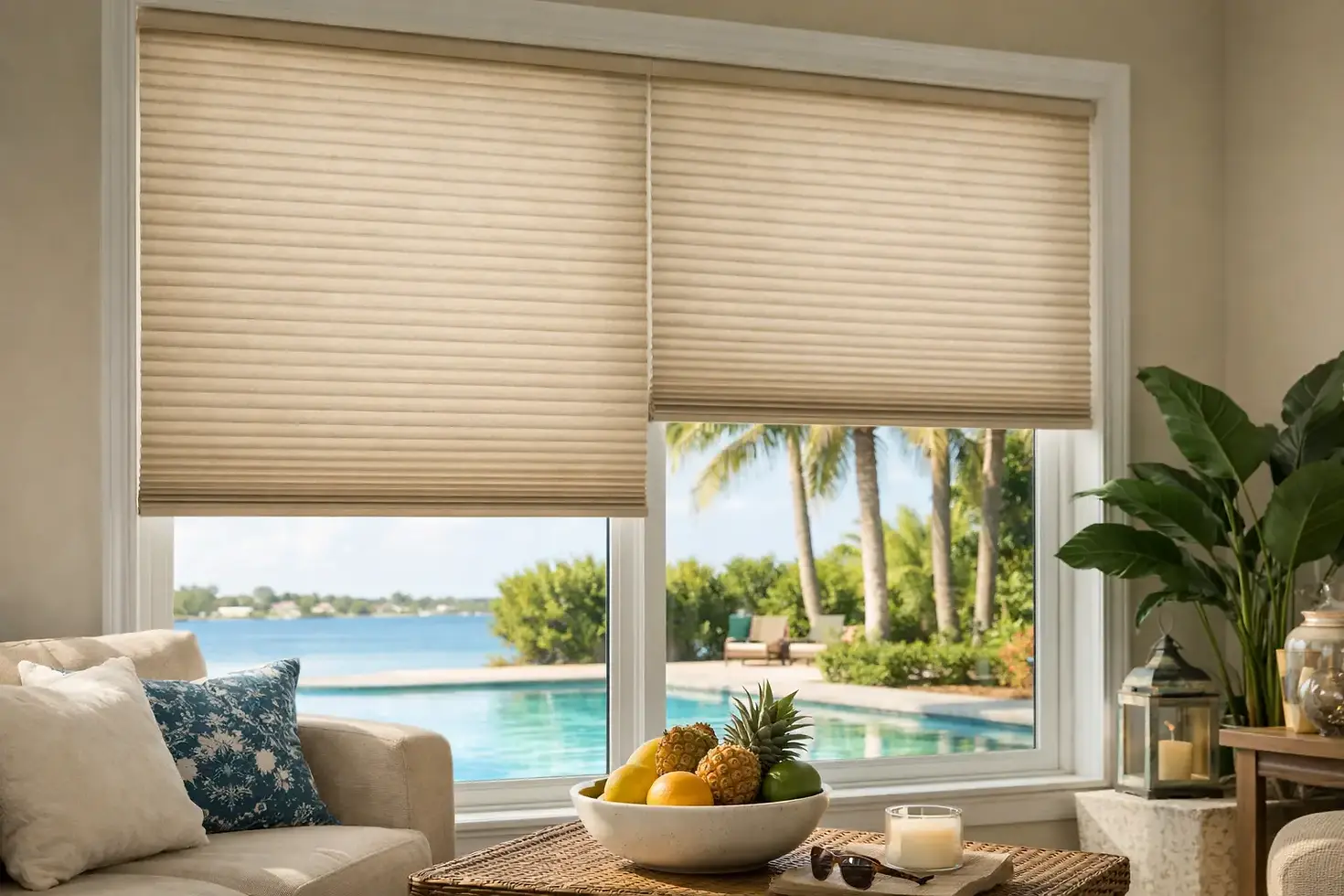
Honeycomb Shades Review: Worth It for Florida?

A window that catches the afternoon Florida sun can make one side of the house feel noticeably warmer by dinner. That is where this honeycomb shades review begins: with the everyday comfort these shades can bring, not just their clean, tailored appearance. Their cellular pockets are designed to hold a layer of air at the window, helping soften heat gain while giving a room a polished, welcoming finish.
Honeycomb shades, also called cellular shades, are a strong choice for homeowners who want more than basic light coverage. They can deliver privacy, gentle light filtering, room-darkening options, and a less cluttered look than many traditional blinds. But they are not automatically the best answer for every window or every lifestyle. The fabric, cell size, opacity, lift system, and the way the shade is measured all affect the final result.
Honeycomb Shades Review: What Makes Them Different?
The signature feature is the shade's structure. From the side, the fabric forms connected cells that resemble a honeycomb. Those cells create air pockets between the window and the room, unlike a flat roller shade or a blind with open slats.
That design can make a meaningful difference in rooms with strong sun exposure, large windows, or older glass. In Central Florida, where cooling costs and bright sunlight are regular concerns, cellular shades offer a practical way to make a home feel more comfortable without sacrificing style. They do not replace quality windows, weatherstripping, or insulation, but they can be a smart layer of support.
Their look is another advantage. Honeycomb shades have soft fabric surfaces and slim profiles, so they work beautifully in relaxed coastal interiors, classic homes, and newer construction alike. When raised, they stack neatly at the top of the window and leave the view open.
The Benefits Homeowners Notice Most
Better light control without a heavy look
Light-filtering honeycomb shades diffuse harsh sunlight into a softer glow. They are especially appealing in living rooms, dining areas, and kitchens where homeowners want daylight but do not want glare across the floor, television, or countertops.
For bedrooms, media rooms, and guest rooms, room-darkening or blackout fabrics offer more coverage. A blackout cellular shade can greatly reduce incoming light, although small light gaps may still appear around the edges of an inside-mounted shade. If a truly dark room is the goal, the right mounting style and fabric selection matter as much as the word "blackout" on the sample.
Privacy that feels more refined
Closed blinds can provide privacy, but they also bring visible slats and frequent adjustment. Honeycomb shades offer a calmer alternative. Lower the shade, and the window is covered with a uniform fabric surface that gives the room a more finished feel.
Privacy levels depend on the fabric. Sheer or light-filtering materials may show silhouettes at night when interior lights are on, particularly at street level. For bathrooms, bedrooms, or windows close to neighbors, an opaque or room-darkening option is usually the more comfortable choice.
Energy efficiency in the rooms that need it
The insulating cells are the main reason honeycomb shades have such a loyal following. They can help reduce the sensation of heat coming through a sunny window and help retain conditioned air. The effect is often most noticeable in west-facing rooms, sunrooms, and spaces with expansive glass.
Single-cell shades provide a streamlined look and useful insulation. Double-cell shades add another layer of air pockets and may be worth considering for rooms that run hot or cold. The trade-off is that double-cell fabrics are generally thicker and can cost more. For a shaded window that is rarely exposed to direct sun, a single cell may provide the value and appearance a homeowner wants.
A clean fit for difficult windows
Cellular shades can be made for many window sizes and shapes, including tall openings and doors. Their light weight makes them practical for larger windows where heavier coverings may feel bulky. They are also a popular solution for narrow windows because the shade can fit neatly within a small frame, depending on available mounting depth.
Top-down/bottom-up operation is one of the most useful options. It allows the top of the shade to lower while the bottom stays in place. That means natural light can enter from above while maintaining privacy below - a welcome feature in homes with nearby sidewalks, golf cart paths, or close neighbors.
The Trade-Offs to Consider Before You Buy
A thoughtful honeycomb shades review should be honest about the limitations. These are fabric shades, not hard window coverings. While they are durable when properly made and professionally installed, they need gentler handling than faux wood blinds or plantation shutters.
Dust can settle inside the cells over time. Regular light vacuuming with a brush attachment or careful use of compressed air is usually enough for routine care. Deep stains are more challenging, so honeycomb shades may not be the first choice for a window directly behind a busy kitchen sink, a craft area used by young children, or a spot where pets frequently press against the fabric.
The fabrics also do not offer the same ability to direct a view as horizontal blinds. With blinds, you can tilt slats to balance privacy and visibility. With honeycomb shades, the shade is generally either raised, lowered, or positioned from the top and bottom. Homeowners who want to see out while blocking direct sun may prefer horizontal sheer shades, zebra shades, or another adjustable option.
Finally, the energy benefit depends on the complete installation. A custom shade with a close, accurate fit will perform better than a loosely fitted product with wide side gaps. Window direction, glass type, frame depth, and exterior shade all play a part.
Which Honeycomb Shade Style Fits Your Home?
The best choice starts with how you use the room. Light-filtering cellular shades are often ideal for main living areas where you want bright, comfortable daylight. Room-darkening fabrics are a natural fit for bedrooms and television rooms. For a primary bedroom that receives morning sun, a blackout fabric paired with a precise installation can make a noticeable difference in sleep comfort.
Color deserves more thought than many homeowners expect. White and soft neutral fabrics tend to keep a room airy and can reflect a brighter appearance. Warmer taupes, grays, and textured fabrics can add depth, especially against white trim. Because a shade covers a large part of the window when lowered, it should complement the walls, flooring, and furnishings rather than compete with them.
Cordless operation is a popular standard for a clean look and simpler daily use. Motorization is worth considering for hard-to-reach windows, tall windows, or anyone who wants easy control from a remote, wall control, or smart-home system. It is also a thoughtful convenience feature for homeowners who prefer not to reach, stretch, or handle multiple shades each day.
Why Custom Measurement Matters
Honeycomb shades look simple once installed, but they are not a one-size-fits-all purchase. Even windows that appear identical can have small differences in width, depth, trim, or handle placement. A few fractions of an inch can affect whether the shade raises smoothly, clears the sill, or leaves unwanted light gaps.
An in-home consultation makes the process less stressful because you can see fabric samples in your actual lighting, compare opacity levels, and decide whether an inside or outside mount serves the room best. Professional measurement also helps identify details that are easy to overlook, such as shallow frames, decorative molding, sliding doors, or windows positioned behind furniture.
For homeowners in The Villages, Ocala, and surrounding Central Florida communities, Starr Light Blinds brings that guidance directly to the home. The goal is not simply to cover glass. It is to shape light, define spaces, and select a treatment that feels right every day.
Are Honeycomb Shades Worth It?
For many homeowners, yes. Honeycomb shades are worth considering when comfort, privacy, and a soft custom look matter more than the ability to tilt slats. They are particularly compelling for sunny bedrooms, living areas with heat buildup, and windows where a streamlined fabric treatment suits the home's design.
They may be less ideal when a room needs frequent, heavy-duty cleaning or when preserving a partially open view is the top priority. In those cases, another shade or blind style may offer a better match.
The most satisfying window treatment is the one that fits the way you live in the room. Hold the samples up to the window, notice the afternoon light, and picture the shade in use on an ordinary day. That small moment of planning can turn a sunny window from a daily frustration into one of the most comfortable features in your home.


Comments