
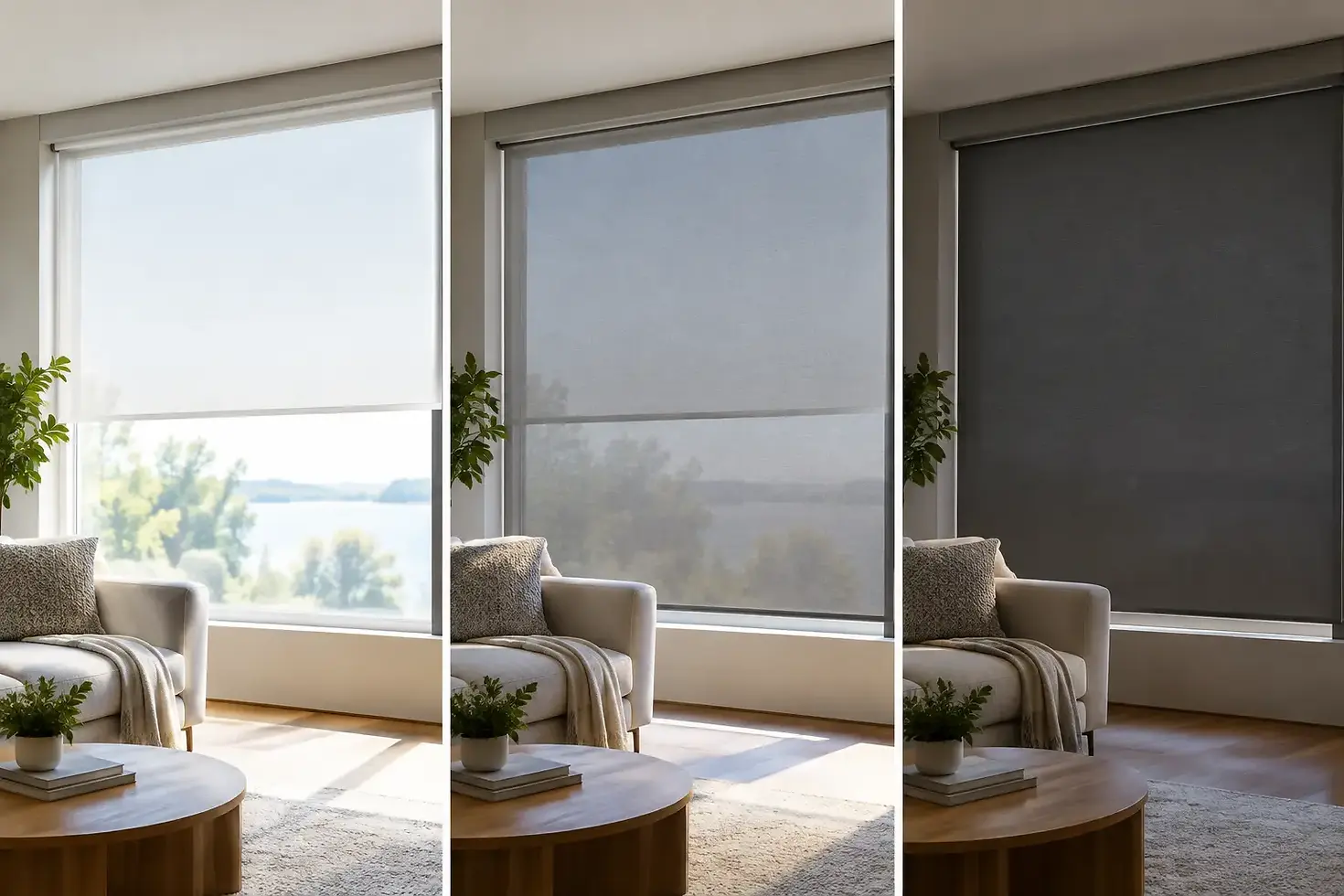
How Solar Shade Opacity Changes Your Room

A bright Central Florida morning can make a beautiful room feel difficult to use. Sunlight catches the television screen, warms the sofa, fades flooring over time, and leaves you closing curtains that also hide the view you enjoy. Solar shade opacity gives you a more tailored way to manage that trade-off.
The right solar shade can soften harsh light, reduce glare, and help make a room feel more comfortable without turning it into a dark box. The key is choosing the right fabric openness and color for the window, the direction it faces, and the way you actually use the space.
What Does Solar Shade Opacity Mean?
Solar shades are made with woven technical fabrics that filter sunlight rather than fully block it. In this category, opacity is often described by an openness factor, usually shown as a percentage such as 1%, 3%, 5%, or 10%.
A lower percentage means a tighter weave. It provides more shading, better glare reduction, and more daytime privacy, while allowing less of the outside view to come through. A higher percentage has a more open weave, so it preserves a brighter room and a clearer view but filters less direct light.
It can sound backward at first: a 1% solar shade is more opaque than a 10% solar shade. The percentage refers to the openness in the fabric, not the amount of darkness it creates.
Solar shades are not automatically blackout shades. Even a tightly woven solar fabric may allow a soft glow around the edges and through the material. If your goal is a truly dark room for sleeping or movie watching, a room-darkening or blackout lining may be the better choice.
Choosing Solar Shade Opacity for Each Space
There is no single best percentage for every window. A fabric that feels perfect in a living room with a lovely backyard view may feel too open in a west-facing office. Start with the room's purpose, then consider the amount and angle of sunlight.
1% Openness: Strong Light Control and Privacy
A 1% openness solar shade is a strong choice for rooms that get intense sun, especially windows facing west or south. It can noticeably cut glare on screens and protect interiors from the daily exposure that can dull fabrics, artwork, and wood finishes.
This level is often appealing in offices, media rooms, and rooms where privacy matters most during the day. You will still have some filtered light, but the view outward will be more subdued. If a window looks directly toward a neighboring home or a busy street, that trade-off can feel well worth it.
3% Openness: A Balanced Everyday Choice
For many homeowners, 3% openness hits the sweet spot. It filters strong Florida sunlight, helps reduce glare, and offers a reasonable outward view during daylight hours. The fabric is substantial enough to make a difference in comfort without making the room feel closed off.
A 3% solar shade often works beautifully in great rooms, kitchens, dining areas, and home offices. It is also a practical option for sliding glass doors when you want a clean, coordinated look and easier control over afternoon sun.
5% Openness: More View, Softer Filtering
At 5% openness, the weave is more open and the view becomes clearer. This is a good fit for a room where preserving the connection to a pool, golf course, garden, or lake is a priority. The shade still diffuses sunlight and reduces some glare, but it will not provide the same level of heat and brightness control as a tighter fabric.
For homeowners in The Villages and throughout Central Florida, this can be a particularly attractive option on covered lanais or in living spaces with shaded exposures. If the window receives limited direct sun, there may be no reason to sacrifice a view for a denser material.
10% Openness: Maximum Visibility, Minimal Screening
A 10% openness fabric offers the clearest view through the shade and keeps the room feeling especially open. It is best for windows with indirect light, protected outdoor areas, or spaces where glare control is a minor concern.
The trade-off is straightforward: more view means less daytime privacy and less protection from direct sun. On a large, unshaded west-facing window, 10% may not be enough to make the room comfortable at the hottest part of the day. It can be beautiful in the right setting, but it needs to match the window rather than simply the sample book.
Solar Shade Opacity and Privacy Are Not the Same Thing
Solar shades offer useful privacy during the day because the brighter exterior light makes it harder for people outside to see in. At night, that effect reverses when your interior lights are on. From outside, silhouettes and activity inside the home may be visible through a solar shade.
This is one of the most common surprises homeowners encounter after choosing a solar fabric based only on daytime appearance. If you need dependable privacy after dark, consider pairing solar shades with drapery panels, choosing a dual shade with a blackout layer, or selecting a more opaque window treatment for that room.
Bedrooms and bathrooms usually call for extra thought. A solar shade may be excellent for daytime heat control, but a blackout roller shade, honeycomb shade, Roman shade with a privacy lining, or plantation shutters may provide the more complete solution.
Fabric Color Also Changes the Result
Opacity is only part of the decision. Fabric color influences how a solar shade looks from inside the room and how well it manages heat and glare.
Darker fabrics generally provide a sharper view to the outdoors because they reduce reflection on the room side of the shade. They can be an excellent choice for a room with a scenic view or for a television area where screen glare is a concern. Lighter fabrics create a softer, brighter appearance and can blend beautifully into a light, airy interior, though the view through them may be less crisp.
The best color is not always the one that looks nicest on a small swatch. Hold the sample at the actual window and look at it during the time of day when the sun is strongest. This is where an in-home consultation can make the decision much easier: the fabric can be evaluated against your wall color, furnishings, window direction, and the real view outside.
When Solar Shades Are the Right Investment
Solar shades are especially effective when your main goals are daylight control, glare reduction, UV protection, and a clean contemporary look. They fit neatly within the window, work well on large glass expanses, and are available with motorization for windows that are tall, wide, or difficult to reach.
Motorized solar shades can be especially convenient in rooms with several windows. Rather than adjusting each shade separately, you can lower them together before the afternoon sun arrives and raise them when you want the view back. For homeowners who value both comfort and simplicity, that daily convenience adds real value.
Still, solar shades are not the answer to every window challenge. If you want complete darkness, strong nighttime privacy, or the architectural presence of wood shutters, another custom treatment may serve the room better. The goal is not to choose the trendiest option. It is to choose a treatment that makes your home easier and more enjoyable to live in.
At Starr Light Blinds, we help homeowners compare solar shade fabrics where they matter most: right at the window. Seeing a 1%, 3%, or 5% option in your own light makes the difference far clearer than choosing from a screen or a tiny sample.
Before selecting a fabric, notice when the sun enters the room, whether you need privacy after dark, and how much you value the view. Those three answers will point you toward a solar shade opacity that lets your home feel bright, comfortable, and beautifully yours.


Comments